Photovoltaics: Tax deduction for installation expenses in buildings
The incentive also applies to expenses for the common areas of apartment buildings
From Solar Home ·
A significant measure to support small self-consumption systems—with or without a battery for energy storage—has been submitted to Parliament for approval. Although the final proposal falls short of the original, it nevertheless provides for a significant tax deduction for expenses incurred by individuals installing photovoltaic systems.
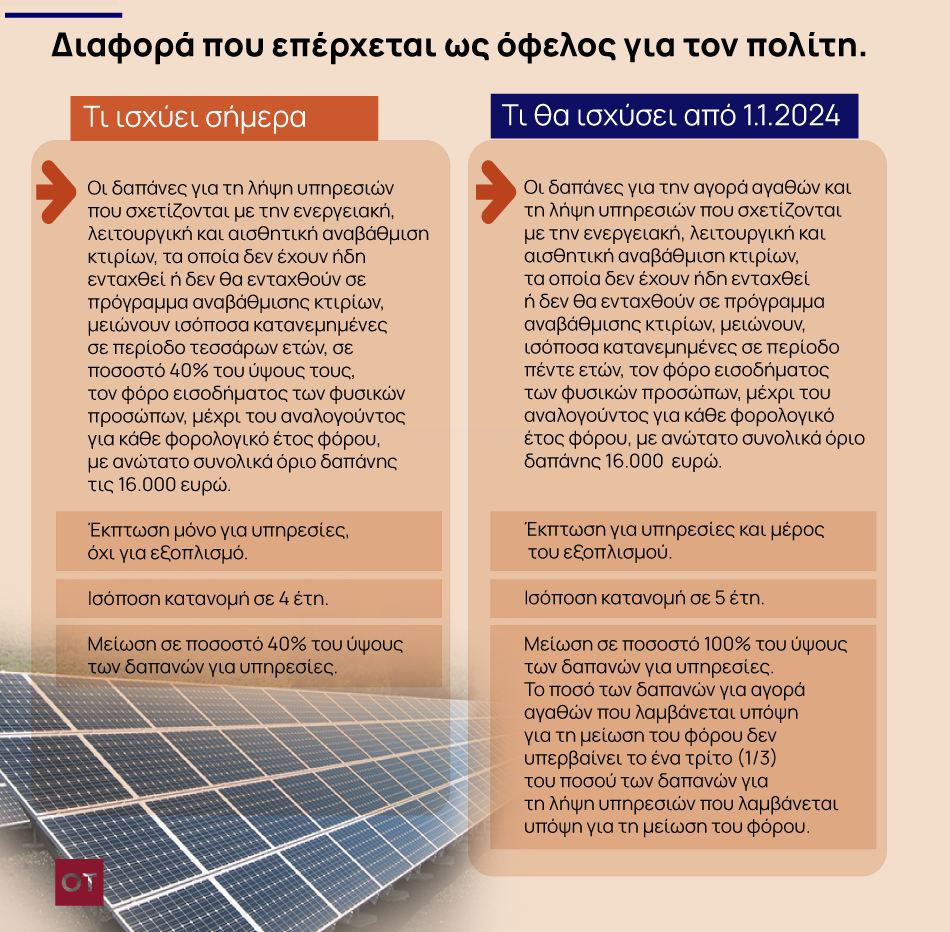
More specifically, it is proposed that expenses incurred to purchase goods and receive services related to energy, as well as to the functional and aesthetic upgrading of buildings, reduce personal income tax in equal installments over five years, up to the amount of tax due for each tax year, subject to a maximum total expenditure limit of 16.000 euros.
What applies and what is changing
The amount of expenses for purchasing goods that may be taken into account for the tax reduction cannot exceed one third of the expenses for services that may be taken into account for the tax reduction. With the help of Mr. Stelios Psomas, advisor to the Hellenic Association of Photovoltaic Companies, Oikonomikos Tachydromos compares the proposal with the current rules and gives examples of the difference in the benefit for individuals.
The incentive applies to all buildings, regardless of their use, provided they are located in Greece and the services are supplied by businesses established in Greece or maintaining a permanent establishment there. The individual must have full ownership or usufruct of the building. The incentive is also available to individuals who have bare ownership, but in this case they must use the building as their primary or secondary residence, or as the registered office or branch of any business activity they conduct. However, in this case, the expenses must not have been deducted from the individual’s business activity. The incentive also applies to expenses for the common areas of apartment buildings, which will be apportioned among the eligible individuals according to their co-ownership shares.
Receipts and invoices
To qualify for the tax reduction, the expense must be evidenced by legally valid receipts or invoices issued in the name of the individual concerned and bearing their Tax Identification Number (TIN). These must separately state the amount for materials and the type and value of the service provided, since the tax reduction is calculated on the latter, as well as the property details (ATAK), unless the expense relates to common areas, in which case the property address alone is sufficient.
Expenses, regardless of their amount, must be paid electronically or through a payment service provider by all eligible individuals, without exception. The measure covers self-consumption photovoltaic systems, with or without storage.
Two examples
Let’s assume someone installs a residential photovoltaic system at a total cost of 8.500 euros, of which 3.000 euros are for services.
The benefit under the current rules is:
3.000 × 40% = 1.200 euros, spread over 4 years, or 300 euros per year.
The benefit under 2024 is:
4.000 euros, spread over 5 years, or 800 euros per year.
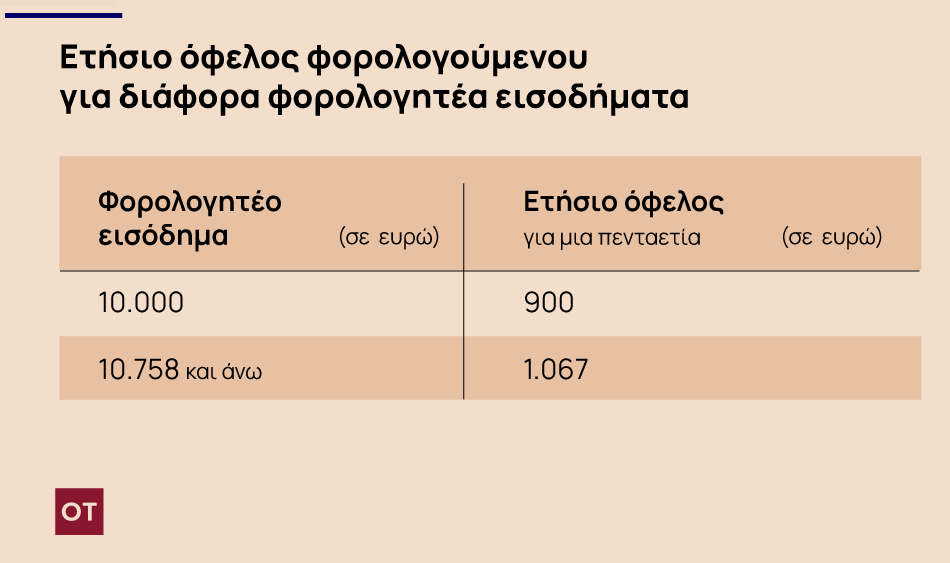
Now let’s assume someone installs a residential photovoltaic system with a battery at a total cost of 16.000 euros (the maximum eligible amount), of which 4.000 euros are for services.
The table below shows the taxpayer’s annual benefit for various taxable income levels.